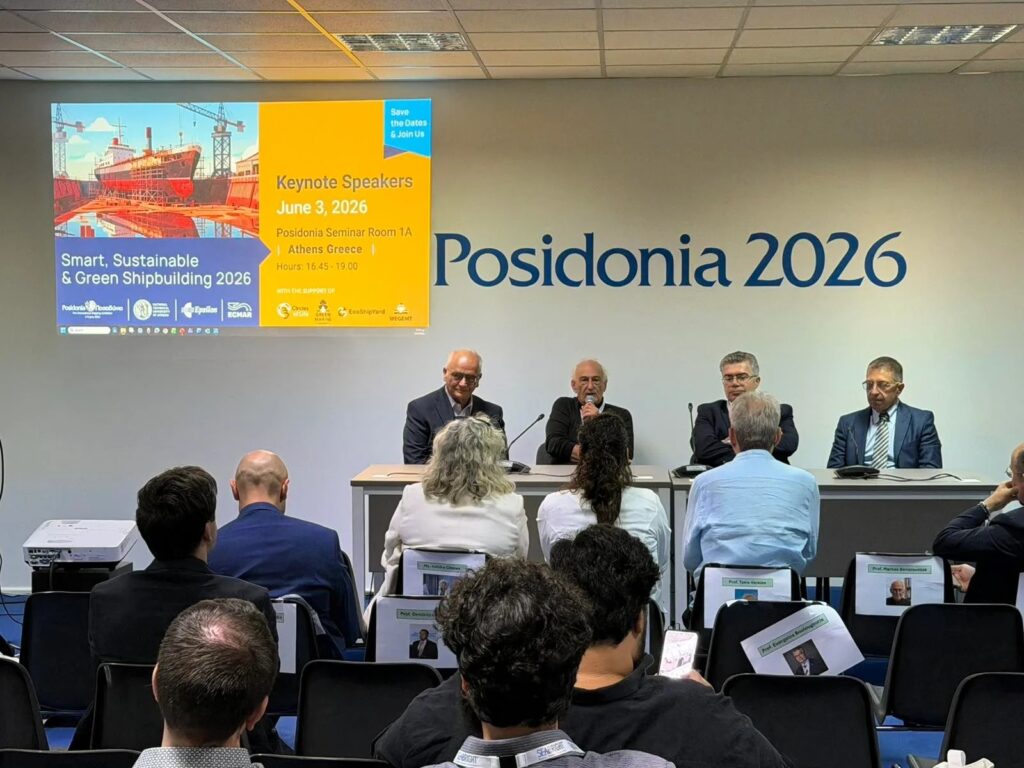
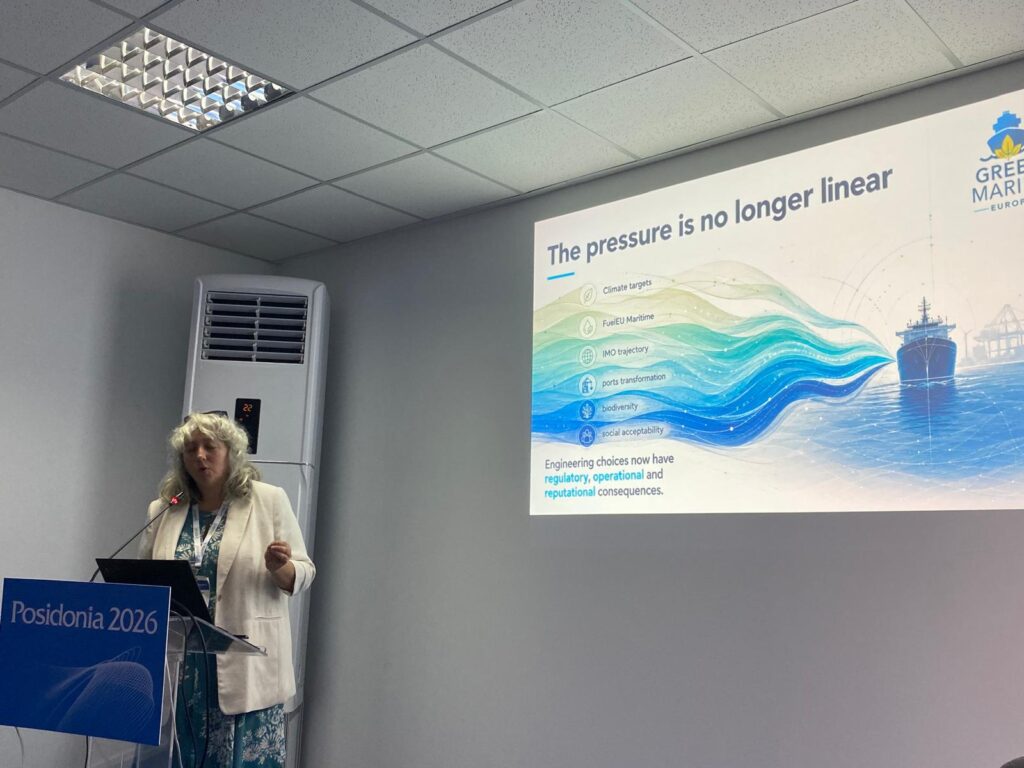
In Athens, Greece, CirclesOfLife delivered an update on the current status of our project during the Smart, Sustainable & Green Shipbuilding at the Posidonia 2026 keynote event. Leading experts from European research, industry, policy, classification and academia gathered to discuss how collaboration can accelerate the transition towards smarter, greener and more circular shipbuilding.
Opening the session, Prof. Marc Bonazountas highlighted the importance of European Commission support through the EcoShipYard and CirclesOfLife projects, presenting the event as a milestone on the road to the International Conference on Smart, Sustainable & Green Shipbuilding, to be held in Glasgow in December 2026.
Moderated by Prof. Apostolos Papanikolaou (NTUA), the session explored the technological, environmental and regulatory transformations shaping the maritime sector.
A central message emerged throughout the discussions: future ships must be designed as part of a wider ecosystem involving shipyards, ports, supply chains, regulators, financiers and society. Sustainability therefore requires collaboration across the entire vessel lifecycle.
Steering Towards the Future:
Collaboration for Sustainable Shipbuilding
Representing Green Marine Europe and the CirclesOfLife consortium, Antidia Citores emphasised that technical innovation alone is no longer sufficient. Future vessels will increasingly be assessed on whether their environmental performance can be anticipated, measured, verified and continuously improved throughout their lifecycle. Directly addressing the audience: “You need proof to your stakeholders. GME certification facilitates verification and provides the credibility you need. Credibility is key. We also realise a common language to move from pilots to scalable practice.”
EU Maritime Strategy
Rosanne van Houwelingen (CirclesOfLife | Maritime & Offshore NL) explored the future of green shipyard operations and the role of circularity in building the ships of tomorrow. Drawing on the European Industrial Maritime Strategy, to which the CirclesOfLife project contributed, she highlighted innovative tools such as the Shipyard Environmental Performance Index (SEPI) and the Ship Lifecycle Passport (SLP), designed to help shipyards measure sustainability performance, reduce environmental impact, and enhance material traceability throughout a vessel’s lifecycle.
(continue reading below the photo)
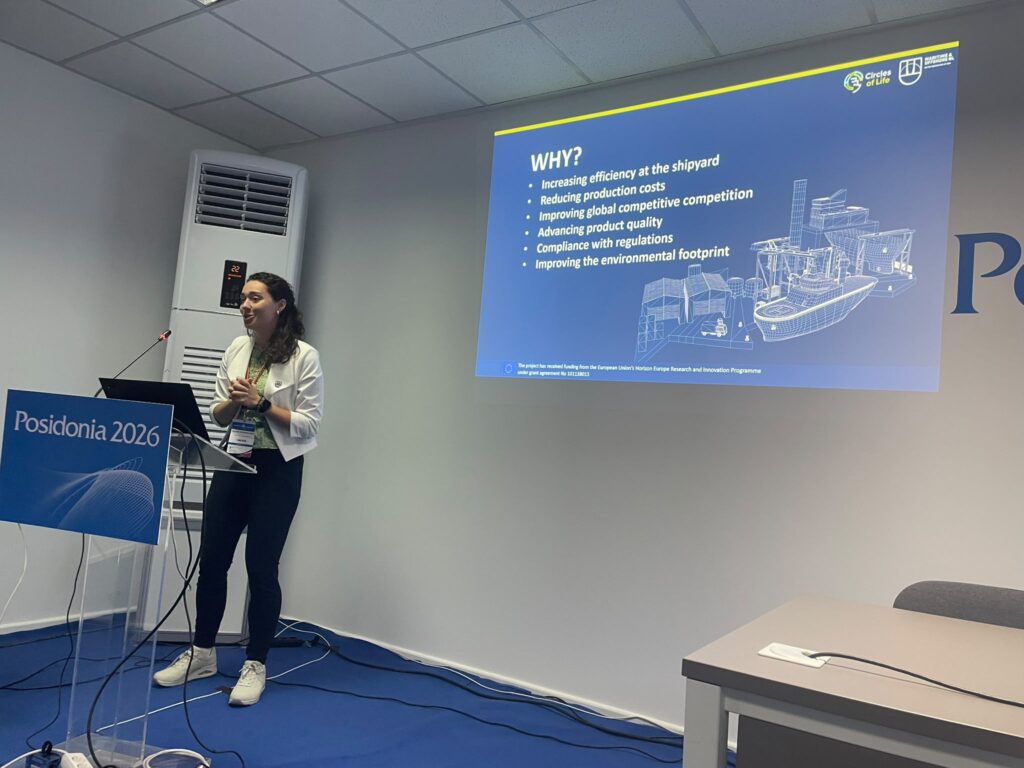
She also emphasised the valuable collaboration between the CirclesOfLife and EcoShipYard projects. As both initiatives focus on making shipbuilding processes more sustainable, bringing together their diverse consortiums of stakeholders and nationalities strengthens their collective impact and accelerates the development of standardised sustainability tools that support cleaner technologies, regulatory compliance, and access to green finance.
Further reading
Read more about this keynote event, panel discussion and speeches of Prof. Takis Varelas (Danaos Research Centre) on digitalisation, Konstantinos Voutzoulidis (ABS) on shipbuilding and environmental data, Paolo Guglia (Cluster BIG) on policy and regulatory perspectives, and Prof. Dimitrios V. Lyridis (NTUA) on education and skills, in the press release distributed by EcoShipYard.