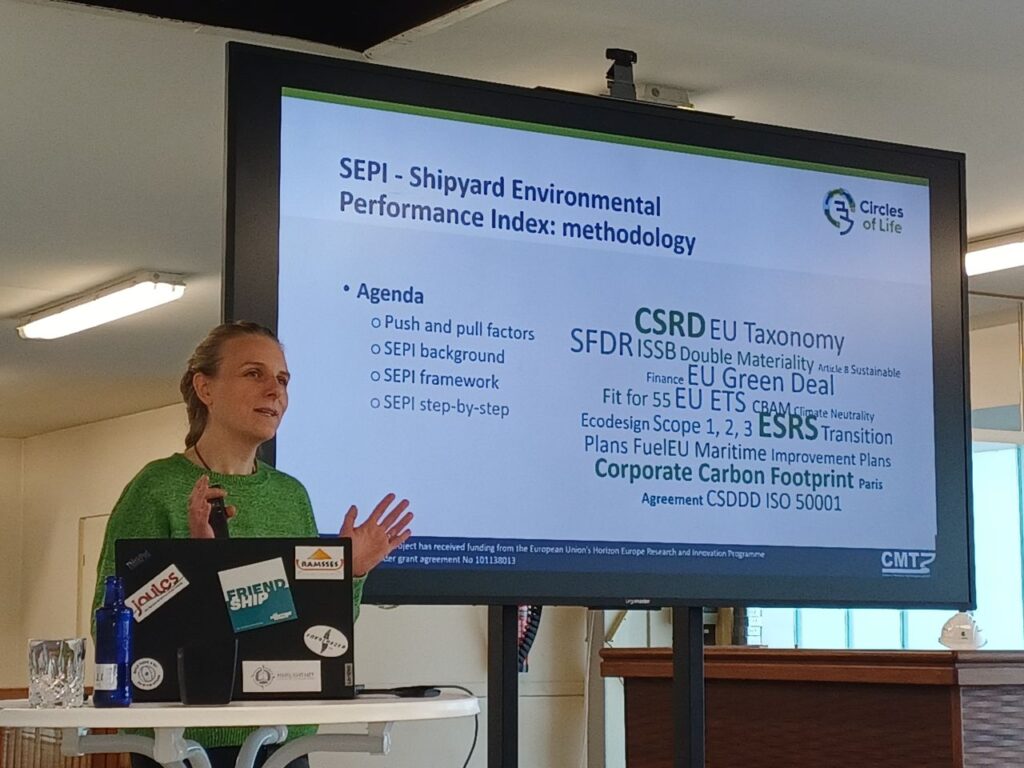
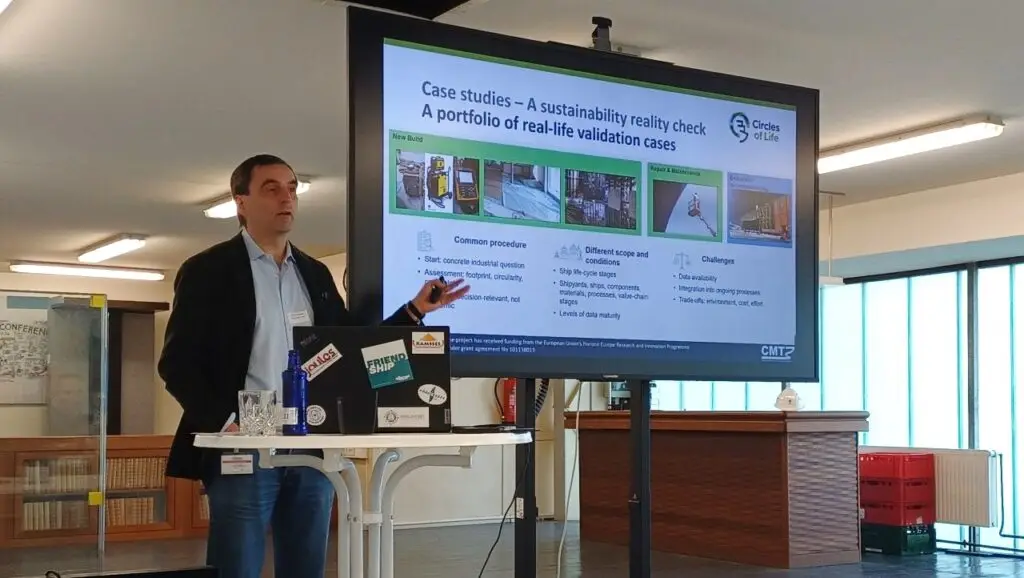
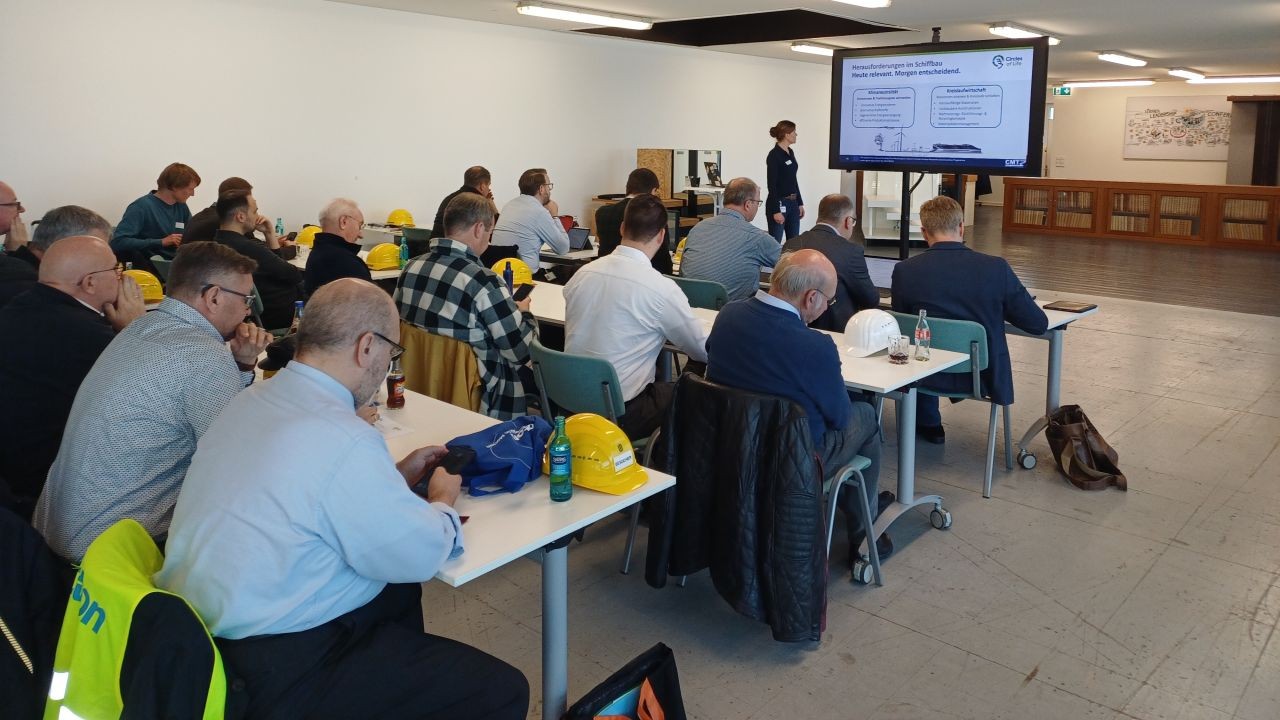
On 4 and 5 November 2026, representatives from shipyards, industry and research gathered at the Lürssen shipyard in Rendsburg, Germany, to present the findings of the European research project CirclesOfLife and discuss how they can be applied in the maritime sector.
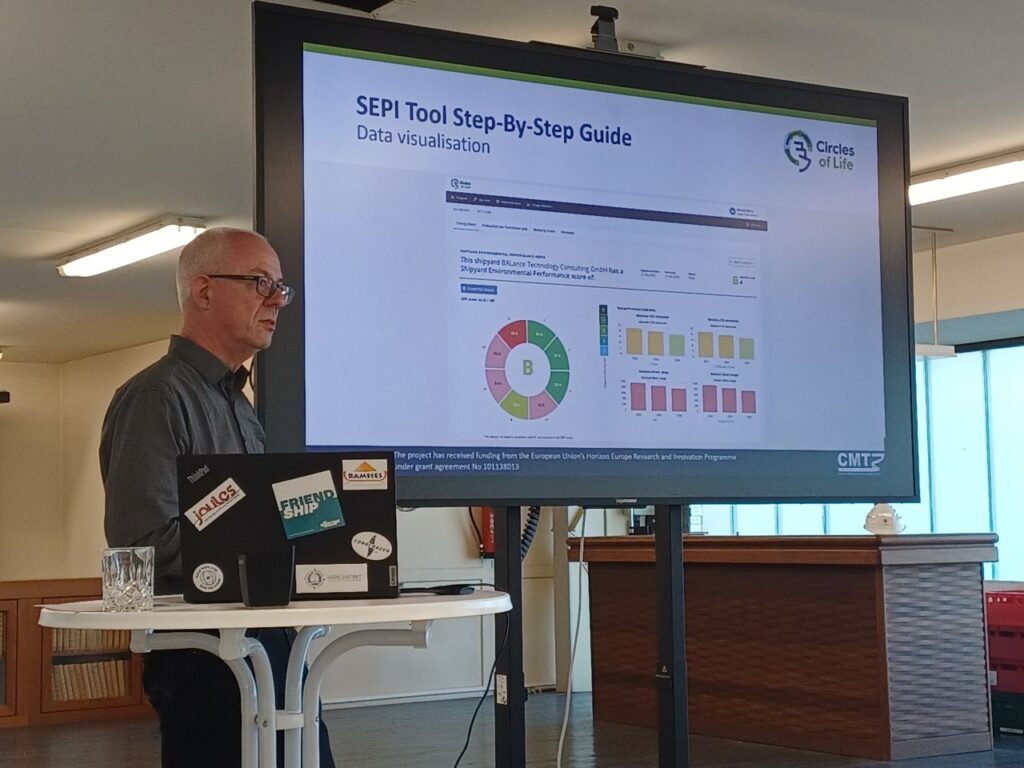
The focus was on the Shipyard Environmental Performance Index (SEPI) concept and the SEPI software based on that, developed as part of the CirclesOfLife project. SEPI enables shipyards to systematically assess their environmental performance and identify opportunities for improvement.
The open exchange in Rendsburg has been particularly valuable for the Verband für Schiffbau und Meerestechnik e.V. (VSM) and the Center of Maritime Technologies gGmbH (CMT). It provides an opportunity to not only present research findings, but also develop them further in collaboration with the industry and identify future research and development needs.
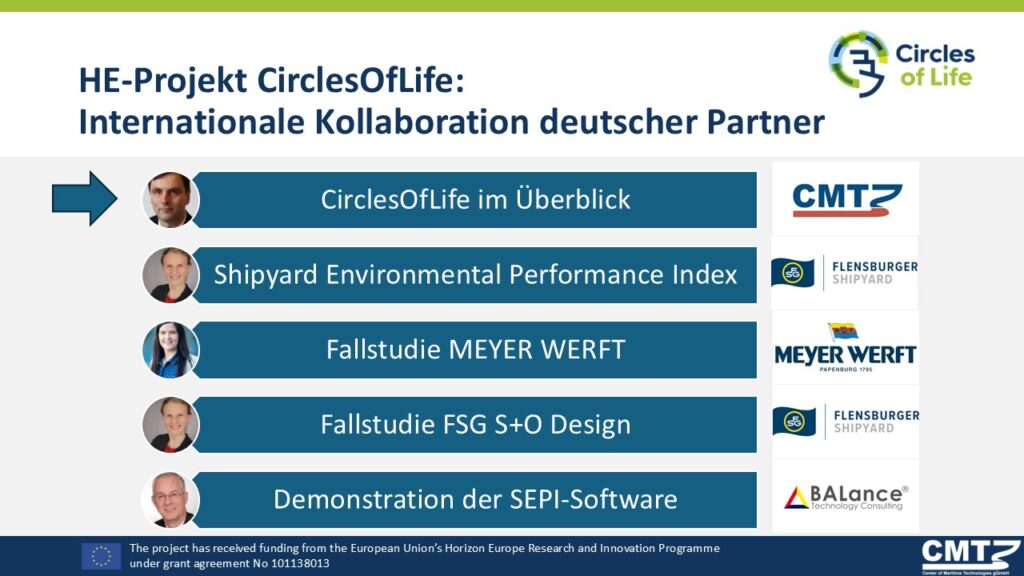
Three partners from the CirclesOfLife consortium shared first-hand insights. Flensburger Shipyard and MEYER WERFT applied the SEPI to perform case studies and identified considerable potentials for reducing emissions of typical processes. Their practical experience, together with a demonstration of the SEPI software by BALance Technology Consulting GmbH, showed how the approaches developed can be put into practice.
One thing became clear: SEPI is not just another report, but a valuable tool that can help make shipyard processes more sustainable, identify environmental hotspots and provide practical guidance on how to address them efficiently.
Connecting research and industry
The participants’ active involvement was remarkable. Their many questions and lively discussions demonstrated the strong interest in the topics presented. Discussions covered not only the project’s current findings, but also areas requiring further development and the needs of the maritime industry.
Topics included the expanding regulatory framework for sustainability and environmental performance, the data required to support it, and ways to integrate the relevant methods efficiently into existing shipyard processes.
At the same time, existing uncertainties and unanswered questions became apparent: Which indicators will be relevant in the long term? Which data can be obtained with a reasonable amount of effort? And how can different requirements be brought together in an assessment system that is practical to use?
A heartfelt thank you to Lürssen Rendsburg for their hospitality and for providing insights into both shipyard sites, and to all speakers and participants for their active contributions, numerous questions and constructive discussions.
We are taking away many valuable ideas and look forward to continuing the dialogue on sustainable and circular solutions for shipbuilding. We are delighted that the work has attracted such keen interest among members of several VSM committees.