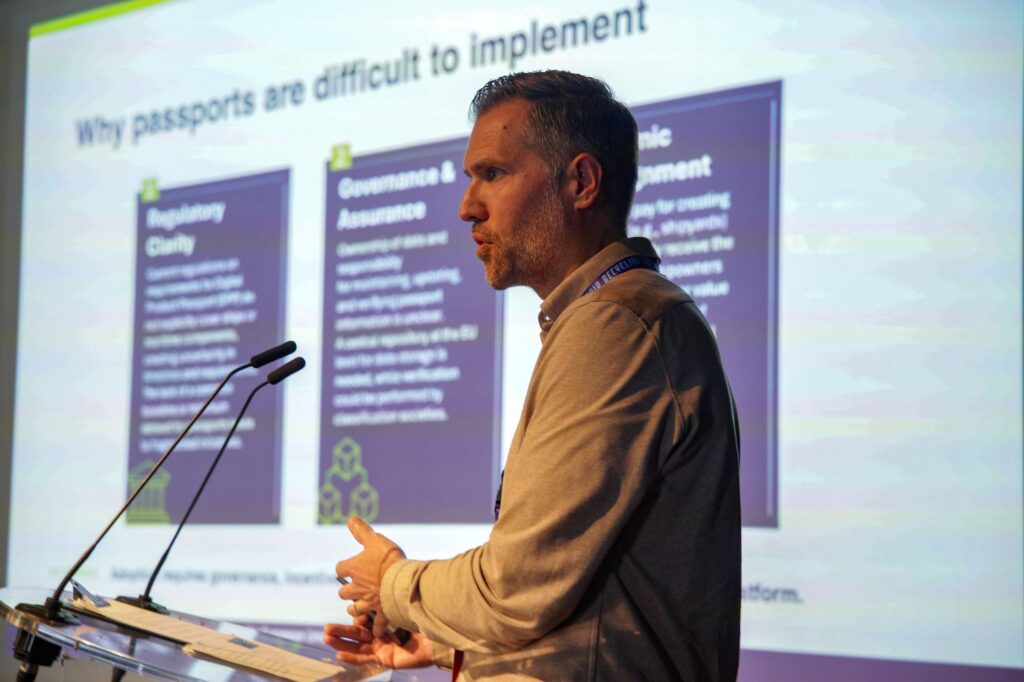
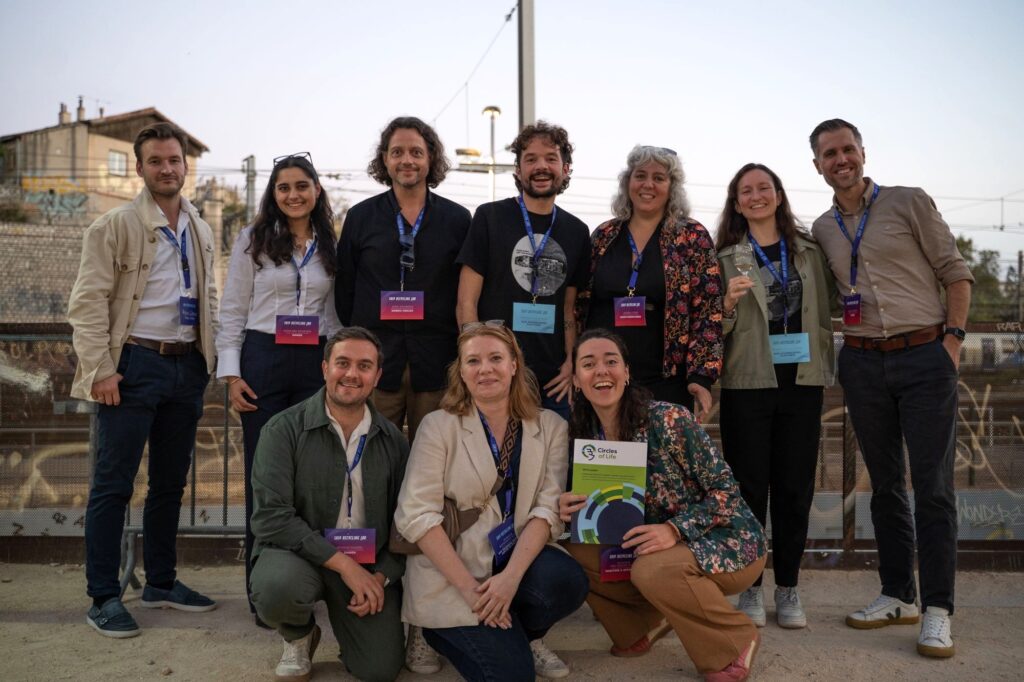
During the Ship Recycling Lab 2026 in Marseille, hosted by the NGO Shipbreaking Platform, the CirclesOfLife partners shared the latest developments and results of the project. The session focused on the project’s ship and material passports aligned with the circularity assessment methodology and featured a real-life case study: the Circular Crew Cabin.
It was a pleasure to have Martin Verboom, Renaud Gaudel, and Nour Abu Muheisen in a session moderated by Rosanne van Houwelingen in Marseille to share their insights and help bridge the gap between research and practice.
The discussion centered on the value of passports for the maritime sector and raised an important question: Do we need more bureaucracy to achieve a more circular maritime industry? How can ship and material passports be implemented throughout the maritime value chain in a way that creates value without adding unnecessary administrative burdens?
As Martin highlighted, more than 50% of the information needed for a material passport is already available. The challenge is to make better use of existing data, avoid duplication and ensure that information is shared efficiently throughout the value chain.
With the conference focusing on ships’ end-of-life stages, particularly ship recycling, Renaud highlighted that material passports offer benefits beyond sustainability reporting. They can also serve as practical tools for dismantling, identifying valuable assemblies, materials and components, and maximising resource recovery at the end of a ship’s life.
Nour presented the practical application of a digital product passport to the Damen Circular Crew Cabin. By putting the concept into practice, the work revealed several challenges, including data availability, the need for input from suppliers and defining the appropriate scope of the passport. These insights demonstrate the importance of translating the concept into workable solutions that meet the needs of real-world applications.
For some stakeholders, the benefits of sharing information about materials and components are already clear. However, this understanding is not yet shared throughout the entire maritime value chain. We need to work together at the European level to demonstrate the value of information sharing and make circularity a shared priority.
That is why we fully support the EU Industrial Maritime Value Alliance (EMA) and its ambition to bring the maritime value chain together and develop practical business cases. As the CirclesOfLife consortium, we strongly recommend establishing a dedicated working stream on circularity, with a specific focus on ship and material passports, to help turn shared ambitions into practical action.
Another key question raised during the session concerned one of the biggest challenges in implementing material passports: How can they be kept up to date throughout a ship’s entire lifecycle, particularly when ownership changes?
This is also a question we are addressing within the CirclesOfLife project. We are engaging with classification societies to explore potential solutions for maintaining and updating these documents over time, ensuring that valuable information remains accessible and relevant throughout a vessel’s lifecycle.
Want to learn more about passports and circularity in the maritime sector?
Click here to read the CirclesOfLife white paper on our website.
Photo credits: Maryne Despres
Photo caption: Martin Verboom, Damen, on digital passports. Group: f.l.t.r.: Adrian Liltved, Nour Abu Muheisen, John Jacobsen, Dominik Kulczynski, Antidia Citores, Benedetta Mantoan, Martin Verboom; Renaud Gaudel, Patrycja Piotrowska-Slotte, Rosanne van Houwelingen. Representing the CirclesOfLife consortium, VTT, Nordic Circles, Maritime&Offshore NL, Damen, Green Marine Europe, NGO Shipbreaking Platform.