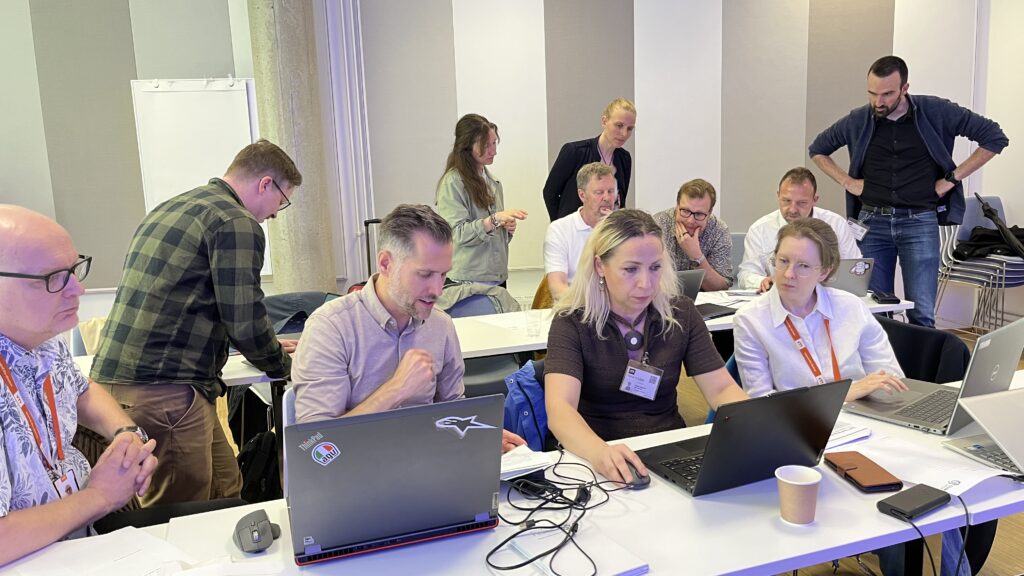
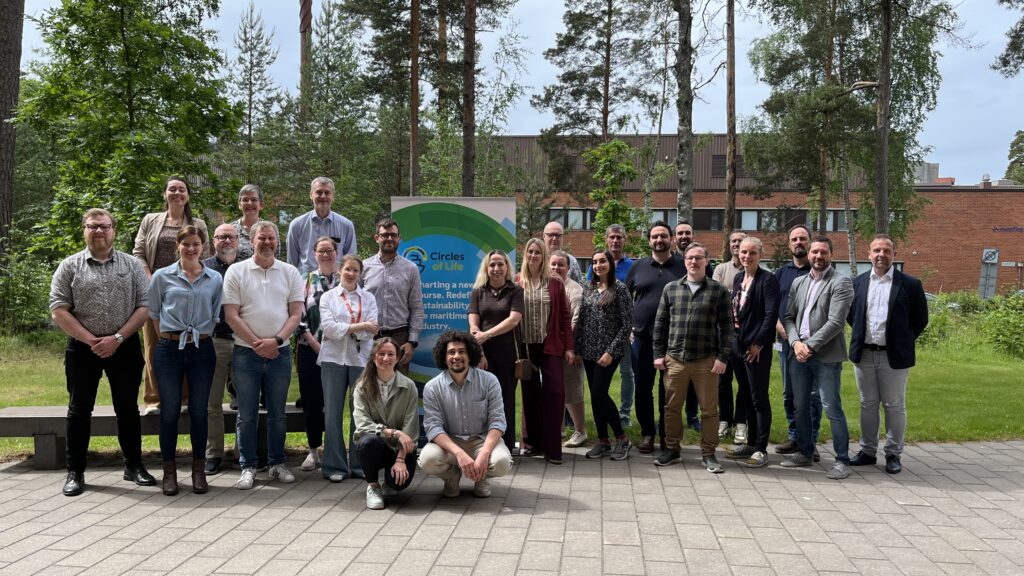
As a follow-up to our pilot training in Rotterdam (the Netherlands) on 3 March 2026, we organised a training session in Espoo (Finland) on 11 July, to which we invited external stakeholders.
The main objectives of the training were to enhance understanding of the Shipyard Environmental Performance Index (SEPI) and its relevance, demonstrate the opportunities offered by SEPI through a case study, and gather feedback from stakeholders to further improve the SEPI tool.
SEPI review for external stakeholders
The first hands-on CirclesOfLife training session was conducted with external expert stakeholders from Finnish maritime networks, as well as from Greece and Italy. Jorinus Kalis, project coordinator of CirclesOfLife, welcomed the participants and provided an introduction to the project and its objectives. The participants were introduced to an important tool currently under development for assessing the Shipyard Environmental Performance Index. Their valuable engagement, expertise, and feedback – representing the fields of ship ownership, ship design, shipbuilding, research, academia, HSEQ, sustainability, Life Cycle Assessment (LCA), and procurement – are greatly appreciated and will contribute to the further refinement and final development of the tool.
(continue reading below the photo)
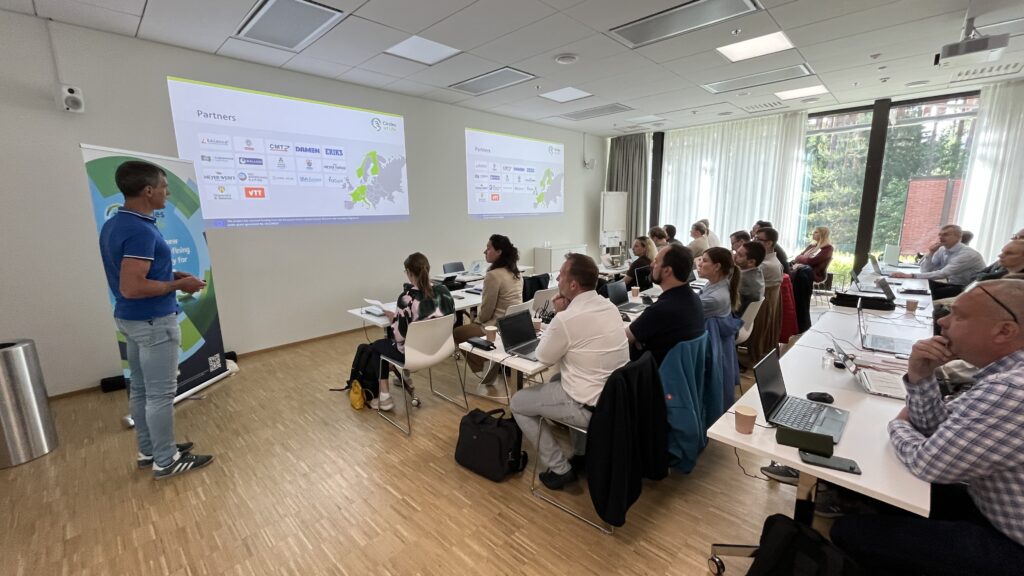
During the morning session, the SEPI drivers and methodology were presented, followed by a detailed discussion of the case study application and the integration of Green Marine Europe (GME). The afternoon session focused on the practical application of the SEPI software tool, where participants explored the step-by-step approach and provided valuable feedback based on their experiences and expertise.
SEPI drivers and methodology
Theresa Wilson (FSGSO) presented the key drivers from a shipyard perspective and introduced the SEPI methodology. In short, the Shipyard Environmental Performance Index is a standardised framework for evaluating a shipyard’s environmental performance. The drivers for establishing this framework can be divided into external and internal drivers.
External drivers include the development of EU legislation and regulations, such as the Corporate Sustainability Reporting Directive (CSRD), the EU Taxonomy, the Emissions Trading System (ETS), the Carbon Border Adjustment Mechanism (CBAM), and other related initiatives. These regulations are expected to drive the maritime industry towards reducing the environmental footprint of shipbuilding processes.
Internal drivers for shipyards and other stakeholders across the maritime value chain include gaining a better understanding of the environmental impacts associated with shipbuilding activities, identifying environmental hotspots, and supporting more sustainable decision-making regarding investments and the selection of technologies.
Recognising that assessment is fundamental to the SEPI framework, Theresa emphasised the importance of understanding what to measure, where to measure, how to measure, and ultimately, how to improve environmental performance.
- What to measure: Within SEPI, the focus is on translating the indicators from the European Sustainability Reporting Standards (ESRS) to the maritime manufacturing industry. The current emphasis is on environmental indicators, including energy consumption and emissions, and will be enhanced by social indicators soon. Within CirclesOfLife, the functional units associated with the indicators are also defined.
- Where to measure: As part of the CirclesOfLife project, a Generic Yard Model has been developed. The main functions within each shipyard scope have been identified, including newbuild, repair and maintenance, and end-of-life activities. Different levels of analysis have been defined, ranging from the shipyard as a whole, down to individual technologies and processes.
- How to measure: Measurements can be carried out at different process levels. The more detailed the measurement, the more valuable the insights. For example, measuring the energy consumption of a specific technology, rather than that of the entire shipyard, provides more detailed information and supports more informed decision-making. The level of measurement ultimately depends on the capabilities and available data of each shipyard.
- How to improve: The SEPI tool will include a process inventory containing Best Available Techniques (BAT) and associated environmental performance data. It will also enable users to model “to-be” scenarios tailored to their own shipyard processes, allowing them to simulate the implementation of alternative technologies. This functionality supports the identification and evaluation of opportunities to improve the environmental performance of shipbuilding processes.
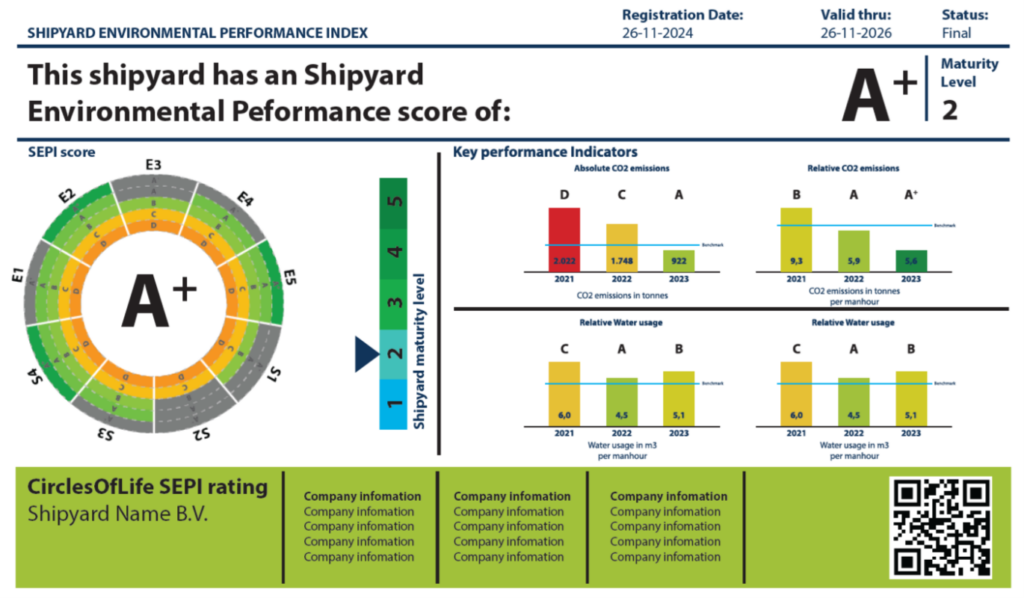
The SEPI scoring system ranges from 1 to 100 and is based on the maturity level of the shipyard, the availability of process measurements, and the environmental performance measured through KPIs linked to the ESRS. See below for an example of the scoring system (continue reading below the image)
Case study application and validation
The validation of the SEPI framework within the CirclesOfLife project is ensured through its application to real-life case studies. Martin Verboom (DAMEN) presented their case study, which focuses on repair and refit shipbuilding processes. The scope of the case study includes the painting process, including surface treatment, waste segregation, and innovative energy management solutions.
Within the case study, the existing painting process was modified and a new technology the “robot paint application” was introduced. The main outcome of the analysis showed that the implementation resulted in both environmental and social improvements at the shipyard. However, the cost-efficiency target was not achieved. A key conclusion from the analysis is that, if incentives for reducing the environmental footprint are not provided, regulatory or other external drivers may be required to enforce change; otherwise, the necessary improvements may not be implemented.
Ensuring the impact within Green Marine Europe
Cherif Belgaroui presented the Green Marine Europe certification framework, which is a voluntary environmental certification programme for the European maritime industry. The objective is to integrate SEPI into the certification process, ensuring that the SEPI methodology is adopted within the Green Marine Europe network. This will strengthen the impact of SEPI and contribute to reducing the environmental footprint of shipyards through more informed and sustainable decision-making.
Step-by-Step approach – Software application
The afternoon of the training session focused on the application of the SEPI software tool developed by Stephan Wurst, Roman Berry and Christian Norden (BALance). The training participants had the opportunity to follow the “Step-by-Step” approach and apply it to the case study as earlier presented, focusing on the painting repair process.
Step-by-Step Approach
- Step 1 – Yard layout model setup
Setting up the yard model by adding information on meters, energy consumers, areas, and buildings. - Step 2 – Yard process model setup
Adapting the generic yard processes to reflect the specific processes of the shipyard. - Step 3 – Data collection
Measuring or reusing existing shipyard data from audits and importing the data into the SEPI tool. - Step 4 – Calculation and analysis
Calculating the SEPI score and yard maturity level by validating the model and comparing the results against SEPI baseline values. - Step 5 – Improvement
Identifying improvement opportunities by comparing results against baseline SEPI values (e.g., previous SEPI calculations or by creating a new “to-be” scenario). This allows users to replace existing yard technologies with more sustainable alternatives from the process inventory. - Additional step – Relation to the Ship Lifecycle Passport (SLP)
The SEPI results can be reused in a Digital Product Passport for ships to support the documentation of the non-operational phase of a ship throughout its lifetime, including Life Cycle Assessments (LCA).
The training participants engaged in an in-depth exploration of the software tool. Several interesting questions were raised during the session, and valuable feedback was collected. Topics discussed included minimum data requirements, the dependency of results on data quality, and the relationship between data availability and shipyard maturity. (Continue reading below the photo.)
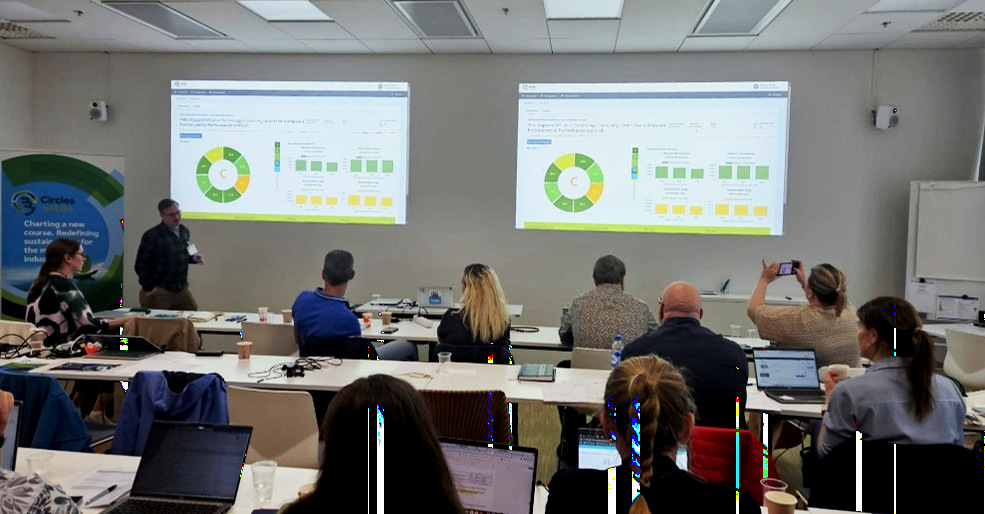
Questions were also raised regarding Life Cycle Assessment (LCA) for ship design and whether SEPI could be linked to this process. This relates to the final step of the approach, where information about shipbuilding processes can be reused to support digital product passports. Therefore, the CirclesOfLife project also focuses on developing a framework for the Ship Circular Materials Passport (SCMP; ship components and materials), and Ship Lifecycle Passport (SLP; entire ship).
Next step
We are now moving towards the next step to clarify and optimise the SEPI tool, which will support the maritime industry in measuring, reporting and decision-making to improve the environmental impact of shipbuilding processes.