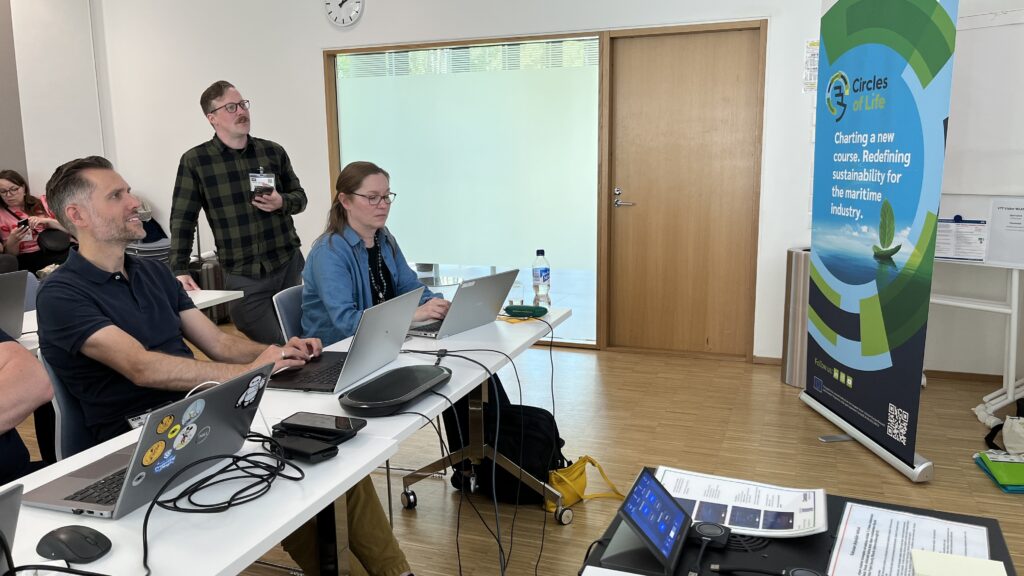
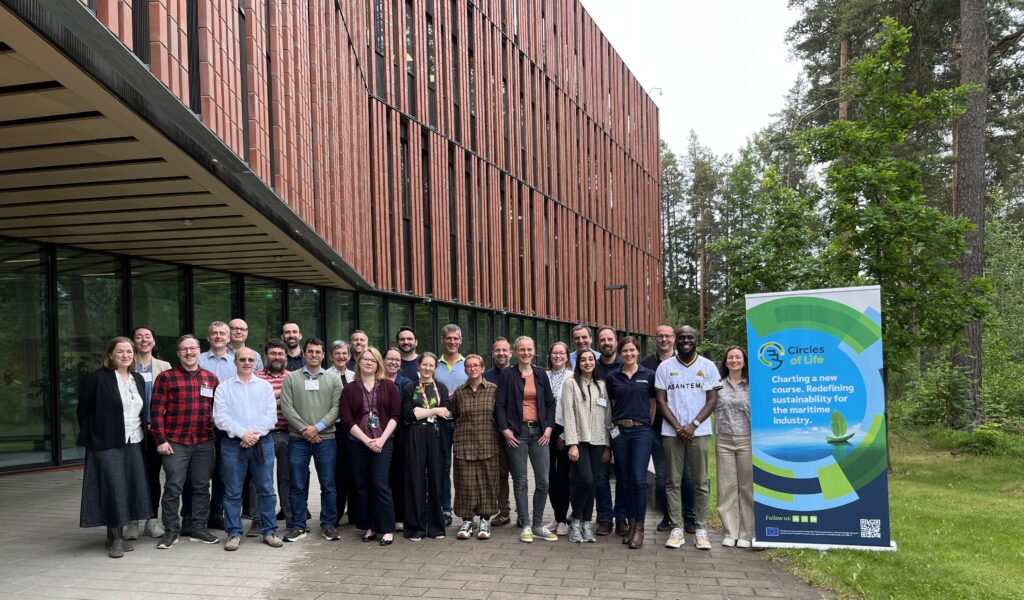
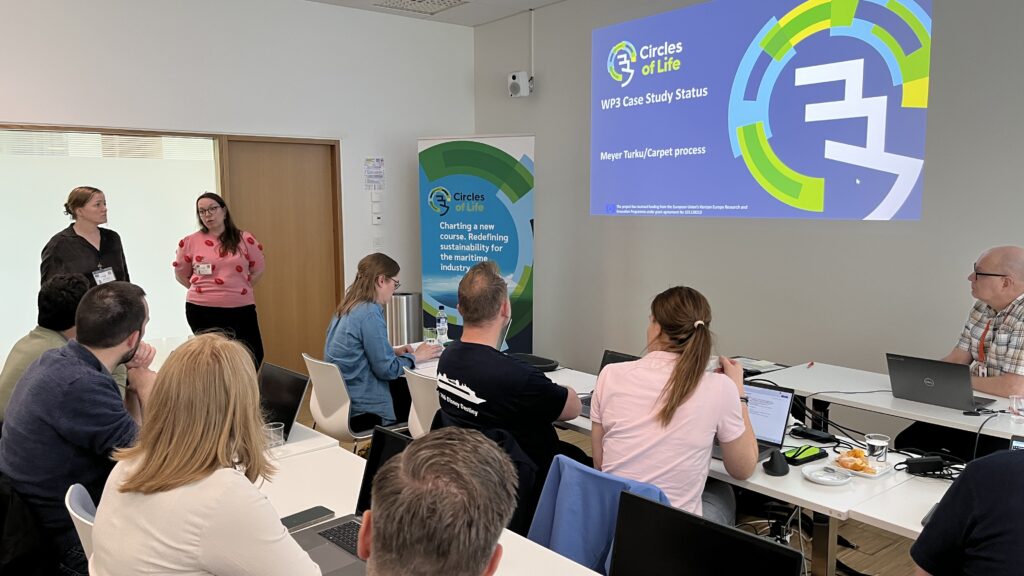
In summary, the CirclesOfLife General Assembly marks a positive step from research and pilot activities towards practical application. With valuable input from consortium partners and engagement of external stakeholders, the project further strengthens tools, case studies and collaborative approaches to develop insights into the Shipyard Environmental Performance. We can now focus on the next phase and continue improving the outcomes based on the lessons learned and feedback received. All aimed to support circularity, lower emissions and improved environmental decision-making across the maritime sector.
From 9 to 11 June 2026 we are hosted by VTT, Finland’s state owned Technical Research Centre in Espoo, west of Helsinki. On the agenda is the consortium’s progress in our EU Horizon project CirclesOfLife about Enhancing material circularity and lower emissions of ship building processes in all phases of the life cycle.
General Assembly
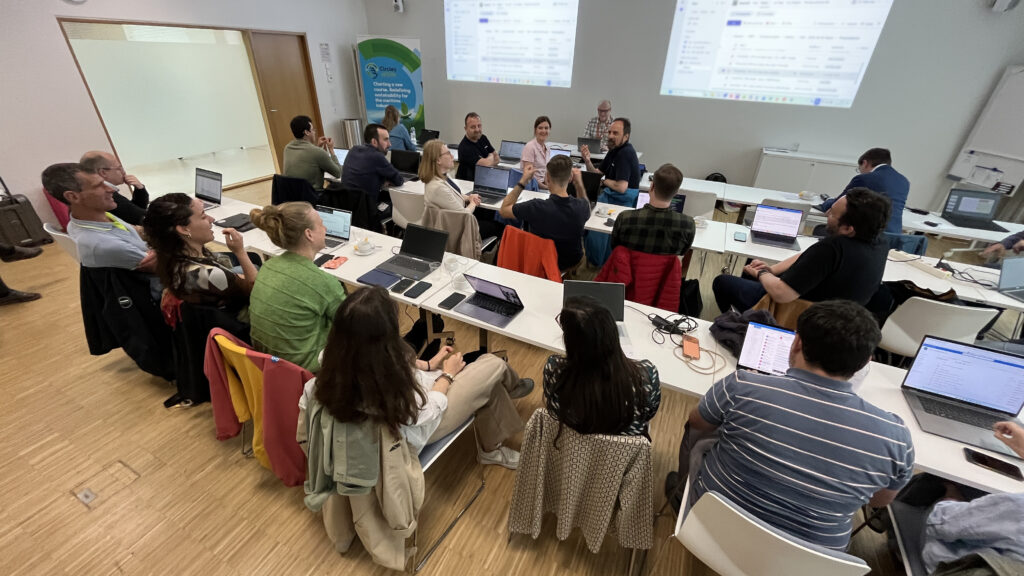
During the two-day General Assembly, CirclesOfLife-partners share their latest insights and developments and discuss what still needs to be tackled. The following key takeaways are shared.
(continue reading below the photo)
Research ship recycling market
The tentative results of the research into the ship recycling market are close to being finalised by consortium partner the University of Genoa (UniGe) and prepared for publication. One of the objectives is to analyse ship recycling yards, including the types of ships they dismantle and their critical processes. Another objective is to analyse, from a shipowner’s perspective, the selection process associated with the end-of-life phase of ships, including the selection of a ship recycling yard. We will inform you as soon as the final results are published.
Visualisation passports
Preliminary visuals let us explore how the Ship Circular Materials Passport (SCMP) and Ship Lifecycle Passport (SLP) can be created. The visual tool contributes to a better understanding of the passports and highlights the associated data requirements, including the information that needs to be collected on materials throughout the maritime value chain. This tool supports the validation process of the blueprint of the passports.
The connections between the different project outcomes in development are explained in just a few seconds in the CirclesOfLife video animation.
Business case propositions
Within CirclesOfLife, the aim is to develop business case propositions based on the project’s outcomes to strengthen the project’s impact. At the same time, the European Commission will launch the EU Industrial Maritime Value Chains Alliance, where maritime stakeholders will collaborate on shared business cases and priorities. SEA Europe is collecting input from companies and their respective business cases for the alliance, and we are aligning this process with the business case development within CirclesOfLife to ensure consistency with the needs and priorities of the European Commission.
Environmental benefits
Case studies have been conducted and their status is discussed. While environmental and social benefits are in most cases clear, some financial and business-case aspects remain challenging and require further investigation and improvement. Colleagues from the different shipyards present at this assembly, provide encouraging and valuable input for the work ahead.
The current case studies
- Damen: surface treatment, waste segregation, and innovative energy management; hull cleaning and ship paint repair
- Flensburger Shipyard: new-builds welding and blasting processes
- MEYER WERFT: modular prefabricated folded wall frame system, MeyFrame
- Nordic Circles: upcycled steel approach to cutting emissions. Measurements of cleaning, cutting, and internal logistics
- NGO Shipbreaking Platform: ship end-of-life; steel hull cleaning, run-off water treatment, and hull cutting
- Meyer Turku: carpet recycling process at large scale on a cruise ship
Software tool
The German partners Center of Maritime Technologies and BALance Technology Consulting, together with shipyards and University TUD, have worked on modelling case studies and real-life data to develop a software tool to score the Shipyard Environmental Performance Index (SEPI). The tool is intended to support required data reporting and decision-making with a focus on sustainable shipbuilding processes. The latest version of this software tool is being tested during the training with external stakeholders on June 11, about which you can read in the upcoming article.