CirclesOfLife partner CMT gGmbH from Germany, represented by Matthias Krause, took the opportunity to share knowledge and insights about our new tools under development, the Shipyard Environmental Performance Index and the Digital Passports for Shipbuilding (SLP, SCMP), during the International Ship and Offshore Structures Congress 2025. The complete written ISSC2025 report has been published recently, including contributions from various committees, each dedicated to a specific R&D domain when it comes to ship and offshore structures.
During the 2022-2025 term, Matthias Krause was a member of the technical committee IV.2 which reviewed the latest progress and challenges in materials and fabrication technologies for ship and offshore structures. It highlights important trends, gaps in knowledge, and provides recommendations for improving how new materials and processes are designed, qualified, and approved.
Hamburg meeting
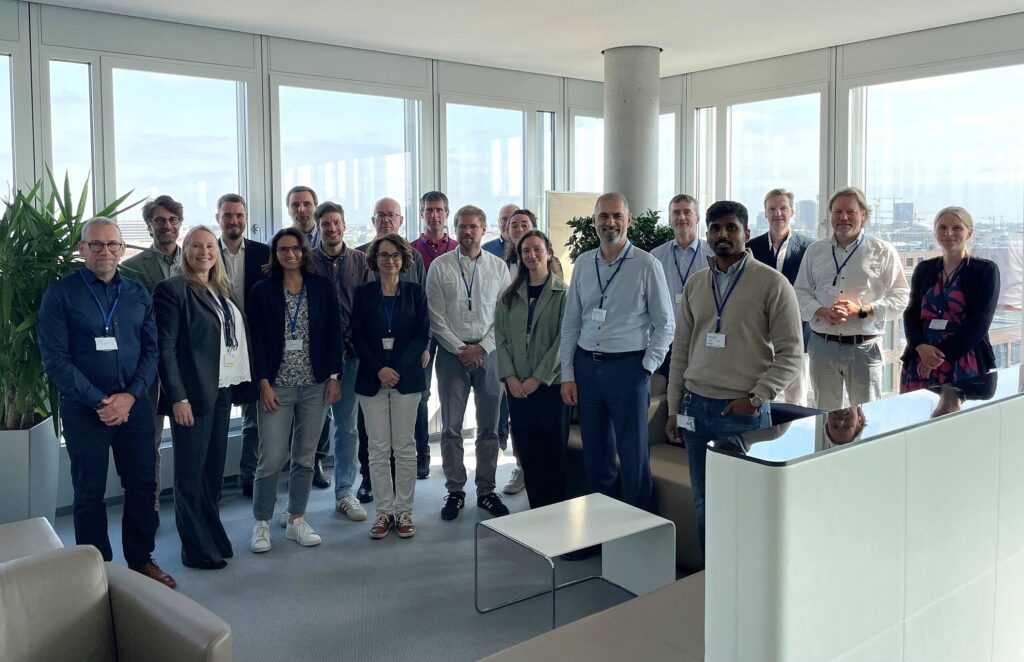
Within the Committee IV.2 report, there is the report of the ‘Hamburg meeting’. This workshop was organised in 2024 (see photo and article on our website) to bring together experts from the Committee, from R&D projects such as CirclesOfLife, classification societies etc. Discussed were specific achievements and needs particularly related to the topics covered in CirclesOfLife. Some insights:
Global Material Supply and Sustainability Challenges
There is a current shortage of material supplies worldwide, driven by a significant rise in steel production over the last two decades. Steel manufacturing is energy-intensive, accounting for around 8% of global carbon emissions and about 30% of industrial emissions. The industry is actively pursuing methods to reduce its carbon footprint. The report highlights the importance of developing materials and technologies to lower the carbon footprint and increase recycling capabilities in these sectors for sustainable growth.
CirclesOfLife
worldwide knowledge sharing opportunity
The report refers to EcoShipYard and CirclesOfLife, addressing in detail methodologies to which extent shipyards are applying measures and technologies to reduce emissions and energy consumptions. An extensive article is included in the report about the ISSC expert meeting in Hamburg. You can download the documentation of this expert workshop here; this report also serves as the Appendix to the Committee IV.2 report.
Some other interesting highlights of the report on Material and Fabrication Technology:
Advanced Materials
The industry is looking at lightweight materials and composites, like fiber-reinforced polymers (FRPs), for hydrogen transport. However, more research is needed to solve challenges like material aging and performance under pressure.
Sustainable Choices
Future studies should compare different natural composite materials, considering not just their technical abilities but also whether their sources are sustainable and do not affect the food supply.
Regulations
Current rules are based on traditional materials. Updating these rules will allow new materials and technologies to be used safely and efficiently.
Improved Frameworks and Collaboration
Creating favorable conditions through regulatory adaptation, market incentives, and knowledge-sharing platforms is critical. This includes green certifications (based on SEPI), collaboration between stakeholders in projects like CirclesOfLife, and targeted training programs to bridge knowledge gaps and foster the adoption of sustainable practices across the industry.
Collaboration and Training
Working together and sharing knowledge, along with targeted training and incentives, will help the industry adopt new, sustainable practices.
Smart Shipyards
Digital tools are being used to plan and build ships more precisely. Technologies like virtual and augmented reality (VR/AR), artificial intelligence (AI), and integrated platforms help manage the flow of information and improve quality.
Digital Twins
Creating digital copies of ships and platforms helps improve design, production, and maintenance. Full benefits will come from better integration and data sharing, but issues like cost and lack of standards need to be addressed.
Better Data and Digitalisation
More accurate data collection and sharing during shipbuilding and operation will help improve competitiveness. However, using data-driven methods without enough expert knowledge can lead to mistakes, so industry-specific rules are recommended. Environmental Focus: Future shipbuilding should use greener processes and aim for recycling and circular use of materials.
Industry Engagement
Recent meetings and workshops have helped experts discuss important topics, such as ways to reduce emissions from ship production and repair. More cooperation with material specialists is encouraged.
More insight into the details
The full set of reports from all Committees involved in ISSC 2025 can be obtained at Springer’s website.
About ISSC
The International Ship and Offshore Structures Congress 2025 serves as a global forum for experts in marine structural research. Committee members from Europe, Asia, the Americas and Australia exchange information, collaborate, and advance the understanding of disciplines related to the design, production, and operation of marine structures.